
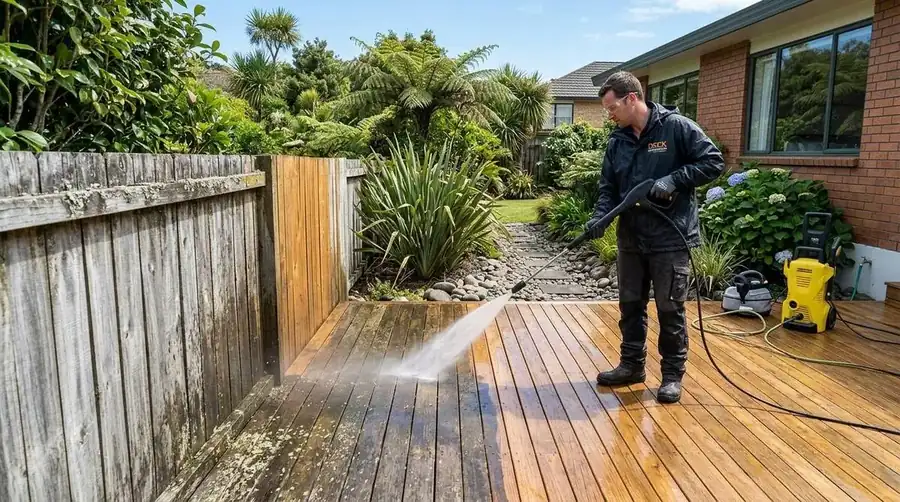
Deck Cleaning
How to Restore and Protect Your Deck and Fence with Professional Cleaning
Grey, slippery timber and mossy fence lines are avoidable. Here’s how professional cleaning brings decks and fences back to life — and keeps them that way.
By Hydro Clean NZ Limited · July 2026 · 6 min read
Nothing dates an outdoor living area faster than a deck that’s gone grey and slippery, or a fence line disappearing under a layer of moss and lichen. In Auckland’s wet, temperate climate, timber and composite outdoor surfaces take a beating year-round—and left untreated, that build-up doesn’t just look bad, it becomes a genuine safety hazard and can shorten the life of your timber. The good news is that most decks and fences aren’t beyond saving. Here’s what’s actually happening to your outdoor timber, and how professional cleaning restores it properly.
Why Decks and Fences Go Green and Grey
Timber decking and fencing sit low to the ground, often in shaded corners of the section, and rarely get direct sun for long stretches during Auckland’s cooler months. That combination of moisture, shade and organic debris (leaves, pollen, dust) creates ideal conditions for algae, moss and mould to take hold.
Algae shows up first as a dull grey-green film, especially on the shaded side of a deck or fence. Left alone, it develops into moss, which grips into the timber grain and retains moisture against the wood—accelerating rot in untreated or ageing timber. On fences, black lichen often appears on the top rails and posts where water pools after rain.
Beyond the cosmetic issue, a mossy or algae-covered deck becomes dangerously slippery when wet, particularly on smooth-sawn boards or composite decking. It’s one of the most common causes of slip injuries around Auckland homes during the wetter months.
Timber vs Composite: Different Cleaning Needs
Not all deck cleaning is the same, and the right approach depends heavily on what your deck or fence is made from:
- Pine and treated timber — softer and more porous, needs moderate pressure and the right nozzle angle to avoid raising the grain or “fuzzing” the surface
- Hardwood decking (kwila, vitex) — denser and more resilient to pressure, but can still be marked by inconsistent technique or the wrong detergent
- Composite decking — engineered from wood fibre and plastic, composite surfaces need lower pressure and specific cleaners; aggressive pressure washing can scar the surface texture permanently
- Painted or stained fences — require gentler treatment to avoid stripping the coating along with the grime
A DIY approach with a hired pressure washer treats every surface the same way, which is exactly how decks end up gouged, fuzzy or patchy. Professional cleaners assess the material first and adjust pressure, nozzle type and detergent accordingly.
The Professional Cleaning Process
A proper deck and fence clean generally follows this sequence:
- Clear and inspect — furniture, pot plants and rugs are moved, and the deck is checked for loose boards, protruding nails or rot that need noting before cleaning begins
- Pre-treat — a biodegradable detergent formulated to break down moss, algae and lichen is applied and left to dwell
- Controlled wash — low-to-moderate pressure, matched to the timber type, lifts the organic growth and embedded grime without damaging the surface
- Rinse and dry — a thorough rinse removes all residue, and the deck is left to dry before furniture goes back
If your deck butts up against exterior cladding or a fence line that also needs attention, it’s efficient to have a house wash done in the same visit—one call-out covers the whole exterior.
Should You Oil or Stain After Cleaning?
Once a timber deck is clean and completely dry, it’s the ideal time to apply a fresh coat of decking oil or stain. Clean timber absorbs oil far more evenly than grimy timber, and a fresh coat adds a protective barrier against UV damage and moisture—the two biggest factors in premature greying. We recommend re-oiling every 12–18 months for high-traffic decks, and always after a professional clean while the grain is open and receptive.
Composite decking doesn’t need oiling, but it does benefit from the same regular cleaning schedule to prevent surface staining from tannins, leaf litter and mould spores working into the textured cap layer.
Fence Cleaning: Often Overlooked
Fences rarely get the same attention as decks, but a clean fence line makes a real difference to how a property presents—especially boundary and front fences that face the street. Black lichen on paling tops, green streaking down posts, and moss along the base are all treatable with the same soft-wash approach used on decking, adjusted for painted or stained surfaces.
For homes with extensive fencing or retaining structures, we often combine fence cleaning with a driveway or path water blast in the same visit, tidying up the whole property boundary at once.
How Often Should You Clean Your Deck and Fence?
Most Auckland decks benefit from a professional clean every 12 months, with shaded or heavily treed sections needing attention more frequently. Fences can generally go a little longer between cleans—every 18–24 months—unless they’re in a particularly damp, shaded spot. Staying ahead of moss and algae build-up is far easier (and cheaper) than trying to restore heavily embedded growth after several years of neglect.
The Bottom Line
A grey, slippery deck or a moss-covered fence isn’t a sign your timber is beyond help—it’s a sign it’s due for a proper clean. With the right technique matched to your surface, professional cleaning restores the timber’s natural colour, removes slip hazards, and sets it up for a protective oil or stain that keeps it looking good for longer.
Ready to bring your outdoor spaces back to life? Get a free quote from Hydro Clean and we’ll assess your deck and fencing on site before any work begins.
FAQs
Common Questions
Not when it’s done correctly. Damage happens when pressure is too high or the nozzle angle is wrong for the timber type, which can raise the grain or gouge softer wood. A professional clean matches pressure and technique to your specific decking or fencing material, so the surface is left clean without being roughed up.
Yes, but at lower pressure than timber. Composite decking has a textured cap layer that can scar under high pressure, so we use gentler settings and composite-safe detergents to lift dirt and mould without marking the surface.
You should wait until the deck is completely dry, usually 24–48 hours depending on weather, before applying any oil or stain. Applying oil to damp timber traps moisture underneath and can lead to patchy results or early peeling.
Our detergent treatments kill moss and algae at the root, rather than just blasting off the visible surface, which significantly slows regrowth. Combined with a fresh coat of oil or stain to seal the timber, most decks stay looking good for 12 months or more before another clean is needed.
Absolutely. We regularly clean fences on their own, though many customers combine it with a deck clean, house wash or driveway water blast for a full property refresh in one visit.
Explore Our Other Services
Ready to Restore Your Deck & Fence?
Get a free, no-obligation quote from Hydro Clean — we’ll come back to you fast with fair, upfront pricing.